By Dr Elizabeth Crake
Dental anxiety is one of the most common concerns I hear from parents at our Wimbledon Village practice. A child who clings to the door frame, cries in the waiting room or flatly refuses to open their mouth is not being difficult, they are genuinely frightened, and that fear is entirely valid. The good news is that childhood dental anxiety is very manageable, and with the right approach most children go from dreading the dentist to tolerating it, and eventually to feeling completely relaxed. As the clinician who sees many of the younger patients at The Dental Lounges Wimbledon, I want to share what actually works, at home, in the waiting room and in the chair.
Why children develop dental anxiety
Understanding the root cause is the first step to addressing it. Dental anxiety in children rarely comes out of nowhere. The most common triggers include:
- A previous painful or frightening experience, even a single difficult appointment can create a lasting association between the dentist and danger
- Fear of the unknown, children who have never been before often build up vivid worst-case scenarios in their minds
- Absorbing a parent's anxiety, children are highly attuned to their parents' emotional state; if you tense up when the dentist is mentioned, they notice
- Sensory sensitivities, the sounds of equipment, the bright overhead light and the clinical smell can be overwhelming for some children, particularly those with sensory processing differences
- Loss of control, lying back in a chair while someone works in your mouth is an inherently vulnerable position, especially for young children who cannot fully understand what is happening
The Oral Health Foundation estimates that around one in ten children experiences significant dental anxiety. Left unaddressed, it often persists into adulthood, which is why early, gentle intervention matters so much.
How to prepare your child at home
Much of the groundwork for a successful dental appointment happens before you leave the house. Here are the strategies I recommend most often to SW19 families:
- Choose your words carefully. Avoid terms like "needle", "drill", "hurt" or "it won't be that bad". Reassurances that include the thing you are reassuring about simply plant the idea. Instead, talk about the dentist "counting your teeth", "using a little mirror" and "making sure your smile is strong".
- Read books about it. Picture books aimed at the under-sevens that feature a child visiting the dentist make the experience familiar and non-threatening. A few minutes with the right book can reframe the whole thing as a routine adventure rather than an ordeal.
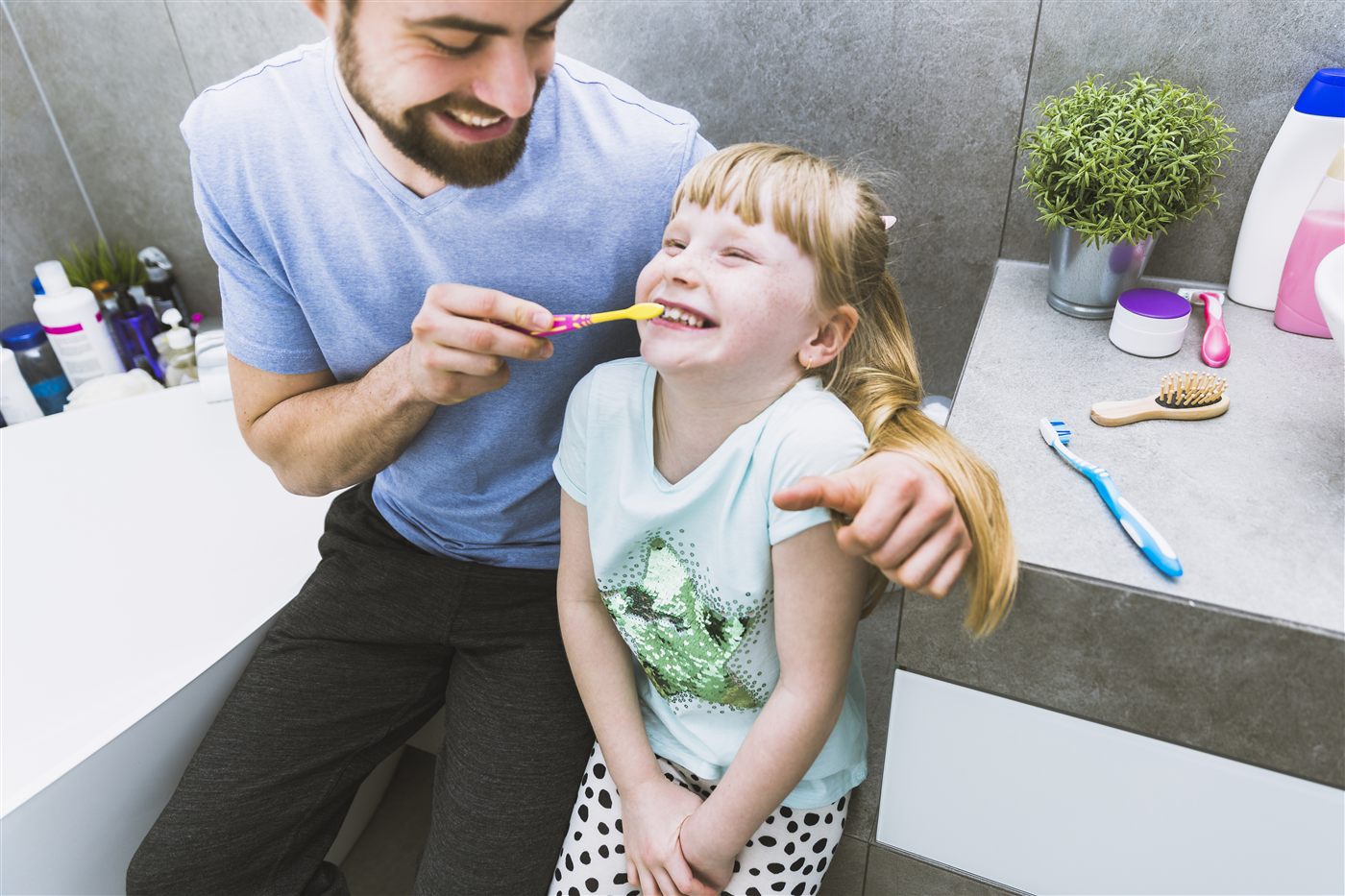
- Play dentist at home. Let your child examine your teeth with a toothbrush, then swap roles. Role play reduces fear by making the unfamiliar feel rehearsed.
- Time it well. Book a morning slot when your child is rested and fed. A hungry, overtired child is far more likely to become distressed. Avoid scheduling appointments after a long school day or during a nap window.
- Be honest but calm. If your child asks whether anything will happen, tell them truthfully that the dentist will look at their teeth and count them. Vague reassurances ("everything will be fine") can backfire if something minor does occur. Specific, calm honesty builds trust.
- Manage your own anxiety first. If you have dental anxiety yourself, it is worth being aware of how you talk about it at home. Children absorb parental attitudes more thoroughly than we realise.
What we do in the chair: the Tell-Show-Do approach
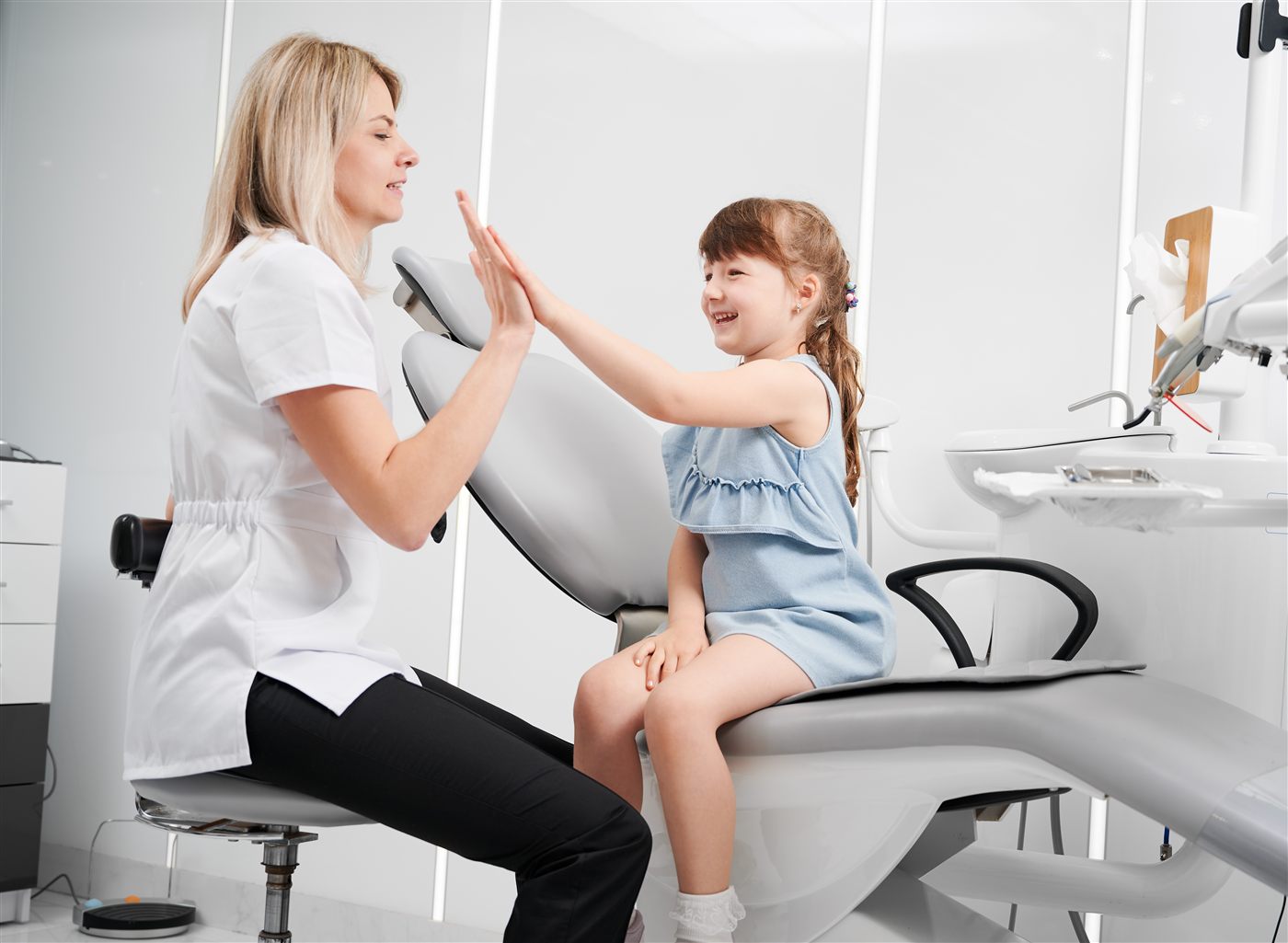
When a child comes to us at our practice on the High Street in Wimbledon Village, we do not simply sit them down and get on with it. We use a well-established technique called Tell-Show-Do, which is endorsed by the NHS and widely used in paediatric dentistry:
- Tell, we explain in child-friendly language exactly what we are going to do and why, before we do anything. "I'm going to count your teeth with this tiny mirror, can you see how it has a little handle?"
- Show, we demonstrate on our own finger, on a model or by letting the child hold the instrument so it is no longer mysterious
- Do, only once the child has understood and (ideally) consented, we proceed, slowly, with regular check-ins
We also encourage parents of younger children to stay in the room throughout and to hold their child's hand or even let them sit on a parent's lap during the examination. A familiar anchor makes a significant difference. If your child has a comfort object, a small toy or a favourite blanket, bring it along. There is no rule against it.
Distraction tools also help enormously: we can use coloured sunglasses for the overhead light, and children are welcome to bring headphones and listen to music or an audiobook during any treatment. It is far easier to stay calm when you are listening to a story than when you are focused on every sound the suction makes.
The school summer holidays, including Championship season in late June and early July, are actually a great time to book dental check-ups for anxious children. Without the pressure of the school run and with more flexibility in the day, families can choose a relaxed mid-morning slot when the practice is quieter and children are less tired. If you live near Wimbledon Common or Cannizaro Park, a short walk in the fresh air beforehand can help calm a nervous child before their appointment at 92 High Street. Ring us on 020 3034 4044 to find a time that works around your summer plans.
When anxiety is more serious: sedation and advanced options
For most children, the steps above, combined with a patient, gentle dentist and a few visits to build familiarity, are enough. But for a small number of children, anxiety is severe enough to make routine care genuinely impossible. In those cases, there are additional options worth knowing about:
- Relative analgesia (happy air / nitrous oxide), a mild sedative inhaled through a small nosepiece that produces a feeling of relaxation and mild detachment. It is widely used in paediatric dentistry, wears off very quickly and is considered very safe for children of around five and above. The child remains conscious and can respond throughout.
- Intravenous (IV) sedation, for older children and teenagers with severe anxiety, conscious sedation under the supervision of a qualified sedationist allows necessary treatment to be completed comfortably. The patient is deeply relaxed but not unconscious.
- General anaesthesia, only used for very young children requiring extensive treatment, or those with significant medical needs, and always in a hospital setting. It is a last resort, not a routine option.
If you feel your child's anxiety has reached the point where they are missing necessary dental care, please do speak to us. Avoiding the dentist does not make anxiety better, and untreated decay causes the kind of toothache and emergency treatment that is far more frightening than a routine check-up. Our hygienist appointments are also a gentle, non-invasive way to build positive dental experiences, as there is no drilling and the focus is entirely on cleaning and prevention.
Building long-term confidence: the bigger picture
The most powerful thing you can do for a dental-anxious child is to make dental visits frequent and unremarkable. A child who comes every six months from age one or two has dozens of positive, uneventful appointments under their belt before they are old enough to develop real fear. A child who only comes when something hurts has learned, through experience, that the dentist equals pain.
Alongside regular check-ups, good habits at home form the other half of the equation. The Oral Health Foundation recommends:
- Brushing twice a day with a fluoride toothpaste (at least 1,000 ppm for children under three, 1,350–1,500 ppm for older children)
- Supervised brushing until around age seven, when fine motor control is sufficient for an effective technique
- Limiting sugary food and drinks to mealtimes, reducing the frequency of acid attacks on enamel
- Introducing flossing or interdental brushing as soon as the teeth are touching
When children grow up with strong teeth and minimal decay, there is simply less to do at each visit, and that in itself reduces anxiety. It is the foundation of everything we do at our family dental practice in Wimbledon Village.
Book a gentle appointment for your child in Wimbledon
Our team is experienced with anxious children and will always go at your child's pace. Morning appointments are available to fit around the school day.
Book an appointment 📞 020 3034 4044Frequently asked questions
Dental anxiety in children is very common and usually stems from fear of the unknown, a previous uncomfortable experience, or picking up on a parent's own nervousness. It can also be triggered by sensory sensitivities to sounds, smells or bright lights. A gentle, unhurried approach, where the child is allowed to explore the room and equipment at their own pace before anything starts, goes a long way to replacing fear with familiarity.
Children can show dental anxiety from as young as two or three, often peaking between ages five and nine. If your child's anxiety is so severe that they are refusing appointments, becoming very distressed in the days before a visit, or missing necessary dental care as a result, speak to your dentist. Techniques such as Tell-Show-Do, distraction tools, and in more significant cases nitrous oxide sedation (for older children) can all help. Never let anxiety become a reason to skip check-ups, as untreated decay causes far greater distress than a routine visit.
Yes, we actively encourage parents and carers to stay with younger children throughout their appointment. Young children can sit on a parent's lap during the check-up if that feels more secure. Your calm presence is one of the most powerful tools we have to help an anxious child relax, and we will always let you know exactly what we are doing so you can reassure your child in your own words.